Yellowstone Adventure Blog
Notes from the Backcountry
Hiking in Yellowstone - The Last Days of Autumn
Beautiful meadows tinted gold by the changing seasons
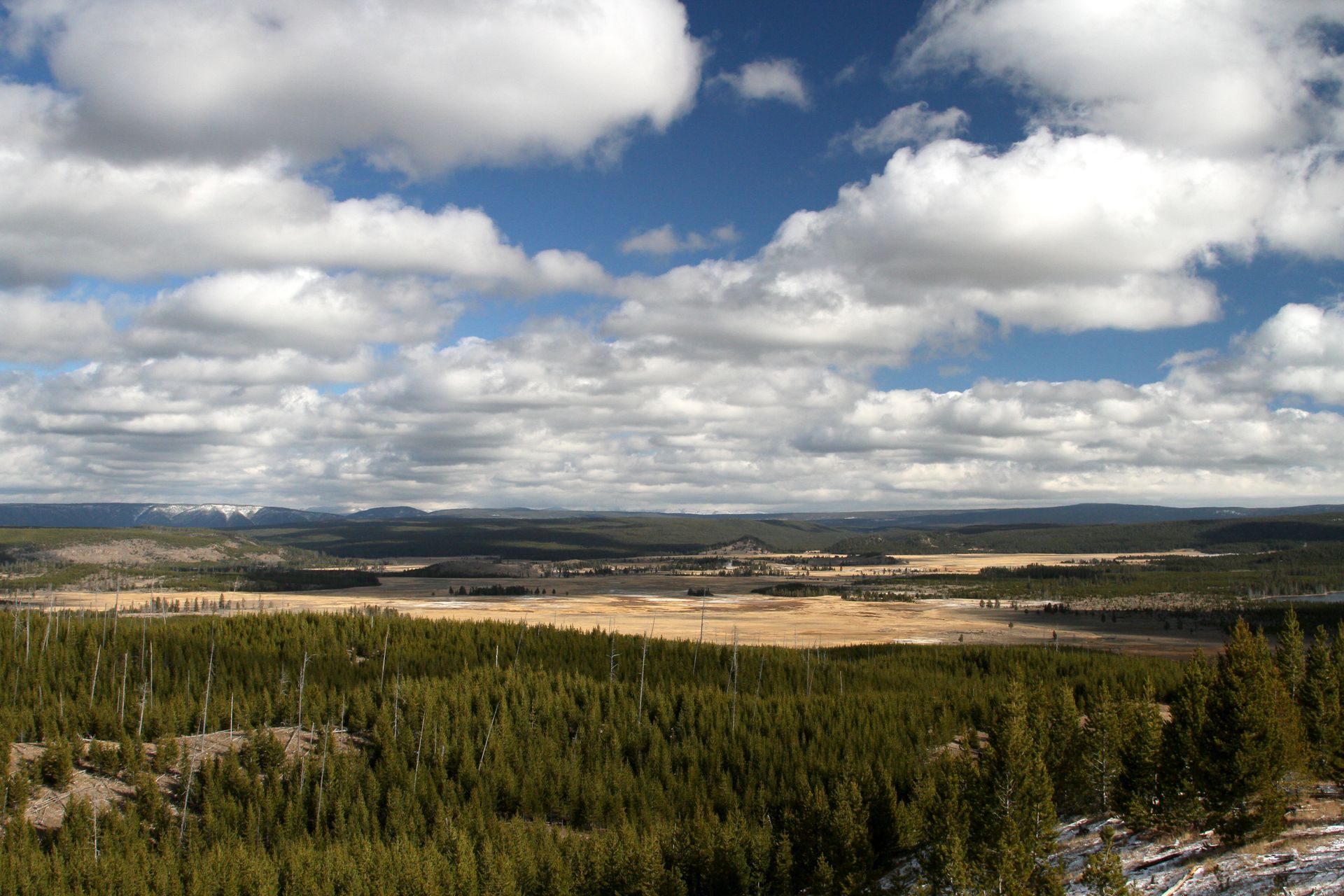
This was the last weekend for automobile traffic in Yellowstone before the interior roads are temporarily closed to prepare for the winter season and over-the-snow travel. I didn't have a specific hike in mind when I left Bozeman, I was just hoping to find a trail that was relatively dry despite the recent snow. As I drove into Yellowstone from the West Entrance the road was nearly devoid of traffic. A handful of fishermen were braving the last few days of autumn to fly-fish along the Madison River and the road from Madison Junction to the Lower Geyser Basin was just as quiet. For the first time this season it felt as if the park were truly empty and it would be a welcome change to experience the quieter side of Yellowstone.
As I left Madison Junction I decided on Sentinel and Imperial Meadows for my hike. These two trails make for an easy 10.3 mile loop that begins along Fountain Flat Drive. As you head south towards Old Faithful, Fountain Flat Drive will be on the right just past the Nez Perce Picnic Area. Follow this paved road to the trailhead which starts at the southern edge of the large parking lot.
The Sentinel Meadows area is incredibly flat with almost no elevation gain. Much of the landscape here consists of sprawling meadows (who would have guessed) with stands of lodgepole pine along the fringes and a variety of thermal features dispersed in between. This area was named for the large geyserite mounds formed by Flat Cone, Steep Cone and Mound Spring that seemingly watch over this surreal landscape like “sentinels.” The trails meander through low-lying areas that tend to be wet throughout much of the year; however, they are generally in good shape and are easy to follow. Numerous hot springs dot the landscape and from across these grand meadows gentle columns of steam rise like ghostly apparitions into the cool and calm autumn air.
Sentinel Meadows is part of the Lower Geyser Basin and the most notable thermal features here include: Ojo Caliente, Spanish for "hot spring," this beautiful blue/green spring appears on the right just before you reach the Firehole River. Steep Cone, Mound and Flat Cone springs are located within the Sentinel Meadows Group and are easily distinguishable by their distinct geyserite mounds. The historic Queen’s Laundry Bathhouse is located to the west and Imperial Geyser and Fairy Falls can be found further to the south.
The Queen's Laundry Bathhouse—or what remains of it—can be difficult to find but with a good map and some basic navigation skills it's possible to locate the remnants of this tiny two-room log structure along the western edge of the Sentinel Meadows loop. Construction of the bathhouse began in 1881 and was commissioned by the park's second superintendent Philetus Norris, but unfortunately the project was never completed. It was added to the National Register of Historic Places in 2001 and is considered one of the earliest examples of a federally funded project built specifically for public use.
Tucked away at the very southwestern edge of this hike is Imperial Geyser. Imperial is a very active spouter that reaches heights of between 20-60 ft., with near constant eruptions. Its emerald waters are often obscured by thick clouds of steam that swirl across its boiling surface. Along the edges of the geyser, bacteria known as “thermophiles,” or “heat-loving” organisms create the brightly colored layers that are present in many of the hot springs in Yellowstone.
To the south and east of Imperial Geyser is the very popular Fairy Falls. This delicate waterfall drops 200 ft. in feathery strands that darken the surrounding cliff face. When approaching from the north this dark patch is the easiest way to identify Fairy Falls from a distance. During the summer months this is a popular destination for day hikers but in late October it was devoid of any and all tourists.
Bison, elk, and grizzly are common throughout this area but at the moment even they seem to have all but vanished like the tourists. Some of the park’s bison will make the journey west along the Madison river toward Hebgen Lake while others will congregate near the park’s thermal areas, seeking refuge in these temporary winter oases. Grizzly bears are excavating den sites, in preparation for the long, harsh winters and elk are migrating to more favorable winter ranges to the north and south and this is just another seasonal transition for these iconic Yellowstone animals.
This is always a nice hike regardless of the time of year but in the fall it's a real gem that is easily overlooked. Its beautiful meadows tinted gold by the changing seasons, the myriad of thermal features located well off the beaten path provide an easy getaway into Yellowstone pristine backcountry.